info@yakimaelectricians.com (509) 992-1165 Yakima, United States
Yakima Electricians Logo (509) 992-1165
Yakima's Trusted Electricians
Free referral service · Licensed local pros

Electrical Troubleshooting Done Right in Yakima

Fast, Accurate Fault Diagnosis for Yakima Homeowners

Licensed & Insured
Local Pros Near You
Local Pros

Or call directly: (509) 992-1165

Free referral service · Licensed local pros

Licensed & Insured
Local Pros
(509) 992-1165
Licensed & Insured

Why Professional Electrical Troubleshooting Matters

Yakima Electricians connects homeowners across Yakima County with licensed contractors who specialize in residential electrical systems.

When something feels off — a flickering light, a tripped breaker, or a faint burning smell — proper electrical troubleshooting is the only way to find the real cause before it becomes a fire hazard.

Related General Electrician Services

Professional Electrical Repair in Yakima carried out by a licensed technician

Electrical Repair

Flickering lights or dead outlets fixed fast — most repairs diagnosed and resolved in a single visit.
Electrical Repair
Professional Electrical Inspection in Yakima carried out by a licensed technician

Electrical Inspection

Catch hidden wiring hazards before they become costly fires or failed home sales.
Electrical Inspection
Professional Code Correction in Yakima carried out by a licensed technician

Code Correction

Bring outdated panels and wiring up to current NEC standards so permits pass without delays.
Code Correction

More Related General Electrician Services

Wiring Yakima Homes Right, Fast

Flickering lights or a tripping breaker aren't just annoyances — they're warning signs. Faulty wiring causes 51,000 house fires annually across the U.S., and Yakima County homes are no exception. Our network of licensed electricians hold a valid Washington L&I license and follow NEC code to the letter, diagnosing problems most homeowners miss. Whether you need Electrical Repair or a full Electrical Service Upgrade

  • ✓Every install passes Yakima County inspection the first time
  • ✓ — ever — just honest, code-compliant work
  • ✓Need it now? Our Emergency Electrician
  • ✓Licensed, insured, and local — your safety is the only priority
Electricians
Wiring Yakima Homes Right, Fast - Licensed

Power Out? We're Coming Now

A tripped breaker panel at midnight or a burning smell from your main service panel can't wait until Monday — electrical emergencies escalate fast and put your family at real risk. Whether it's a failed GFCI outlet triggering a full circuit shutdown or a main service panel fault, local pros fix the root cause — not just the symptom.

Emergency Electrician
Power Out? We're Coming Now - Licensed

Power More, Trip Breakers Never

Tripping breakers every time you run the microwave and dryer together isn't just annoying — it's a warning your panel is maxed out. Our Electricians upgrade homes throughout Yakima County to a 200-amp panel in as little as one day, coordinating directly with PacifiCorp for the utility reconnect so you're never left in the dark longer than necessary. Most Yakima homeowners pay

  • ✓Handles modern EV chargers, AC units, and home additions safely
  • ✓Eliminates fire risk from an overloaded outdated panel
  • ✓Pair with our Electrical Repair or Emergency Electrician services for complete home protection
Electrical Service Upgrade
Power More, Trip Breakers Never - Licensed
01

Why Do My Lights Flicker or Dim?

loose neutraloverloaded circuit

Flickering or dimming lights almost always trace back to a loose neutral connection, an overloaded circuit, or a failing breaker — and the fix depends entirely on which one it is.

A loose neutral at a single fixture usually causes isolated flickering; a loose neutral at the panel can make lights dim across the whole house. Overloaded circuits are especially common in Yakima during summer, when temperatures top 100°F and air conditioners run hard for weeks at a time. That sustained load pushes circuits to their limits daily. A brief dip when a large appliance starts is normal, but dimming that lingers or worsens across multiple rooms warrants a professional look.

02

What Causes a Circuit Breaker to Keep Tripping?

ground faultshort circuitarc fault breaker

A breaker that trips repeatedly on a normal load is telling you there's a ground fault, a short circuit, or a panel hardware problem — not just too many devices plugged in.

A short circuit happens when a hot wire contacts a neutral inside an outlet or device, producing an immediate hard trip, sometimes with a pop. A ground fault occurs when a hot wire touches a grounded surface; arc fault breakers are designed to catch arcing before it ignites insulation, and they're now required in most rooms under current code. In Yakima homes with Federal Pacific Stab-Lok panels, there's an added concern: those breakers are documented to fail to trip at all under fault conditions, turning a nuisance problem into a hidden fire risk. Don't reset and ignore — get it inspected.

03

Can Electrical Problems Be Found Without Tearing Into Walls?

circuit tracerthermal imaging

In most cases, yes — a skilled electrician can pinpoint a fault without opening a single wall section.

Thermal imaging cameras detect heat signatures from arcing connections or overloaded conductors hidden behind drywall, often revealing the problem within minutes. A circuit tracer maps wiring paths and locates breaks or disconnections without any demolition. Outlet testers catch open grounds, reversed polarity, and missing neutrals in seconds. Together, these tools let the electrician isolate a fault to one specific outlet box or junction point, so only a small targeted opening is needed — not a long exploratory cut. Wall cutting is really only necessary when a wire run has failed mid-span, which is far less common than a fault at a termination point.

04

How Do Electricians Troubleshoot Yakima's Older Wiring Systems?

knob-and-tubefuse boxaluminum wiring

Electrical troubleshooting in Yakima's older housing stock requires hands-on experience with systems rarely seen in newer construction.

A significant portion of local homes were built before 1980, according to U.S. Census data, meaning many contain aluminum branch-circuit wiring, fuse box panels, or knob-and-tube runs that predate modern grounding requirements. Aluminum wiring expands and contracts with temperature far more than copper — and Yakima's 90°F seasonal swing accelerates that cycle, loosening terminations and creating resistance faults. Knob-and-tube wiring carries no ground conductor and can't support GFCI protection without remediation. Permits for any resulting work are issued through the City of Yakima Code Administration Division or Yakima County Building Department, depending on your property's location.

05

When Should You Call a Pro Instead of DIY?

multimeterelectrical safety

Call a licensed electrician any time your symptoms include a burning smell, a breaker that won't stay reset, or flickering that spans multiple rooms — these go beyond what a homeowner can safely investigate with a multimeter alone.

A multimeter can confirm whether an outlet has voltage and check continuity on a simple circuit, making it useful for basic checks. But tracing an intermittent fault through aluminum wiring or behind finished walls requires thermal imaging, specialized testers, and an understanding of electrical safety protocols that protect against live-circuit exposure. DIY work on branch-circuit wiring also typically requires a permit in Yakima, and unpermitted repairs can complicate homeowner's insurance claims if a fire occurs.
Why Choose Us for Electrical Troubleshooting?

Trusted yakima electricians professionals serving Yakima

~80% Wall-Cut Free

Non-Invasive Tools

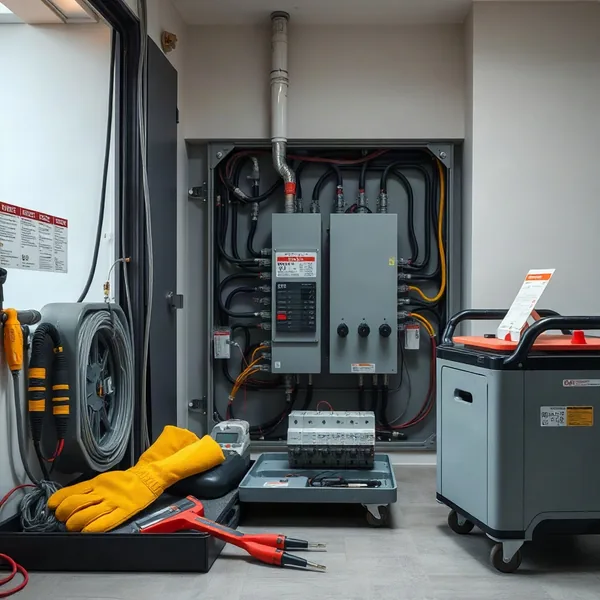
Every contractor we refer carries thermal imaging equipment and a circuit tracer, so the fault is located before any drywall is touched. This approach eliminates speculative wall cuts on roughly 80% of troubleshooting calls in Yakima.

Pre-1980 Specialist

Legacy Wiring Fluency

Yakima's pre-1980 housing stock means our referred electricians regularly work with aluminum branch-circuit wiring, Federal Pacific panels, and knob-and-tube runs — systems that require specific remediation knowledge most general electricians haven't seen in 20 years.

Areas We Serve in Yakima

We connect homeowners in these ZIP codes with licensed local Yakima Electricianss.

Yakima (98901, 98902, 98903, 98904, 98907, 98908, 98909)

Call to be connected with a licensed local pro in these ZIP codes.

How Electrical Troubleshooting Works

Simple steps to get your electrical troubleshooting done in Yakima

1

Book Your Electrical Troubleshooting

We respond within minutes.

2

Free Electrical Troubleshooting Survey

3

Upfront Fixed Price

One fixed price for your electrical troubleshooting — no hidden charges, ever.

4

Electrical Troubleshooting

Frequently Asked Questions

Why do my lights flicker or dim randomly?

▼

Random flickering or dimming usually points to one of three causes: a loose wire connection at the fixture, switch, or panel; an overloaded circuit drawing more amperage than it was designed to handle; or a failing breaker. In older Yakima homes built before 1980, aluminum branch-circuit wiring is a common culprit — aluminum expands and contracts more than copper, loosening connections over time and creating resistance that causes visible dimming. Yakima's seasonal temperature swings of more than 90°F between summer highs and winter lows accelerate this expansion-contraction cycle, making loose connections more likely than in more temperate climates. Occasional brief flickers when a large appliance starts are normal, but persistent or worsening dimming across multiple rooms signals a more serious issue such as a failing main breaker, a problem at the utility connection, or deteriorating wiring — any of which warrants a professional inspection.

What causes a breaker to keep tripping?

▼

A breaker trips for three distinct reasons, and knowing which one applies determines how urgent the problem is. First, an overload occurs when too many devices draw current on a single circuit simultaneously — the breaker trips as designed to prevent overheating. Moving appliances to other circuits usually resolves this. Second, a short circuit happens when a hot wire touches a neutral wire, either inside an outlet, a device, or within the wiring itself — this produces a hard, immediate trip and often a popping sound or burn mark. Third, a ground fault occurs when a hot wire contacts a grounded surface; GFCI breakers are specifically designed to catch these quickly. If the same circuit trips repeatedly under a normal load, that is a short or ground fault — not an overload — and it requires an electrician to inspect the wiring. In Yakima homes with Federal Pacific Stab-Lok or Zinsco panels, a tripping breaker carries added urgency because those panels are known to fail to trip at all under fault conditions, creating a hidden fire risk.

Can electrical work be done without cutting into the walls?

▼

Yes, in many cases. Licensed electricians use several non-invasive diagnostic tools before opening any drywall. Thermal imaging cameras detect hot spots at connections, breakers, and inside walls that indicate resistance or arcing faults. Clamp meters measure current flow on individual circuits to identify overloads. A circuit tracer and tone generator maps wiring paths and locates breaks or faults behind finished surfaces. Outlet testers quickly flag open grounds, reversed polarity, and missing neutrals at receptacles. Using these tools, an electrician can often isolate the problem to a single outlet box, junction box, or panel connection — meaning only one small access point needs to be opened rather than a long wall section. Wall cutting becomes necessary mainly when a wire run itself has failed mid-wall, which is less common than a fault at a termination point. Confirming that your electrician carries thermal imaging equipment before booking is worth the call, since not every contractor includes it in a standard service visit.

How do electricians troubleshoot older Yakima homes' wiring?

▼

Troubleshooting wiring in Yakima's older housing stock requires familiarity with several legacy systems uncommon in newer construction. Homes built before the mid-1970s may contain aluminum branch-circuit wiring, which requires inspecting every termination point for oxidation and verifying that outlets, switches, and breakers are rated AL-CU compatible. Homes from the 1950s through 1980s may have Federal Pacific Stab-Lok or Zinsco panels, which are known to fail to interrupt faults reliably. Knob-and-tube wiring, present in some pre-1950 Yakima homes, carries no ground conductor and cannot safely support modern loads or GFCI protection without significant remediation. The diagnostic process typically begins with a panel inspection, followed by a room-by-room outlet test, and then thermal imaging if hidden faults are suspected. If remediation triggers a permit, that is issued through the City of Yakima Code Administration Division for city properties, or the Yakima County Building Department for unincorporated areas.

Is a burning smell from an outlet dangerous?

▼

Yes — a burning smell from an outlet is a serious warning sign that should be treated as an emergency. It typically indicates active arcing, melting insulation, or an overloaded connection inside the outlet box or behind the wall. Stop using the outlet immediately. If it is safe to do so, turn off the breaker feeding that circuit at the panel. Do not restore power until a licensed electrician has inspected and repaired it. Burning smells are one of the leading indicators of an electrical fire that may already be smoldering inside the wall cavity before any visible flames appear. In Yakima homes with aluminum wiring or older Federal Pacific or Zinsco panels, arcing at termination points is a known failure mode, making this call higher priority than in a home with modern copper wiring. Do not attempt to open the outlet yourself — arc faults can re-ignite when airflow changes.

Have more questions? Call us anytime!

Speak to a local electricians yakima(509) 992-1165Call Now