01
How Do You Know You Need an Electrical Panel Upgrade?
load calculationamperageaging panel
Your panel is telling you it's struggling when breakers trip repeatedly under normal loads, slots are full with no room for new circuits, or you notice flickering lights every time the AC kicks on during Yakima's 100°F summers.
A professional load calculation compares your home's actual electrical demand against your panel's rated amperage — if demand is at or above 80% of capacity, you've hit the ceiling. Yakima's pre-1980 homes are especially vulnerable: a significant share still contain aging panels with known reliability problems. If your amperage falls short of current household needs, a repair won't fix the underlying capacity problem — an upgrade will.
02
What Size Panel Do You Need — 100, 150, 200, or 400 Amp?
Square DGEamp rating
Panel size should match your home's actual and anticipated load, not just replace what's there.
A 100 amp panel suits small homes with gas appliances and minimal electronics — fine for a compact 1950s Yakima bungalow, but not for a home adding a heat pump. A 150 amp panel handles mid-size homes but leaves little headroom. Most contractors recommend 200 amp as the standard for a modern single-family home; brands like Square D and GE both manufacture reliable 200 amp residential panels with 30–40 circuit slots. A 400 amp panel fits large homes or properties running substantial shop equipment. There's no 250 amp or 300 amp standard residential panel — those aren't common configurations. Match your amp rating to your load, not to marketing.
03
How Much Does a Panel Upgrade Cost in Yakima?
permit feelabormeter base
Panel upgrade price in Yakima depends on four main variables: the amperage of the new panel, the brand and number of circuit slots, whether the meter base needs replacement, and permit and inspection fees.
Permit fees through the City of Yakima or Yakima County Building Department add to that total and are non-negotiable for licensed work. Pacific Power rebate programs can offset a portion of qualifying upgrade costs — confirm eligibility before you finalize scope. Always ask for line-item quotes separating equipment, labor, and permit fees.
04
Upgrading an Outdated Fuse Box or Breaker Box
fuse boxbreaker boxmain breaker
Replacing a fuse box with a modern breaker box eliminates one of the most persistent fire risks in older Yakima homes.
Fuse-based systems can't support today's electrical loads, and homeowners often install oversized fuses to stop nuisance trips — a dangerous workaround that removes the protection the fuse exists to provide. When a contractor swaps a fuse box for a breaker panel, the new main breaker becomes the first point of protection for every circuit in the house. If your existing panel is a breaker box but uses a Federal Pacific or Zinsco design, replacement is equally urgent — both brands have documented failure rates that make them a liability. Updating a breaker box typically takes a single workday when no service entrance changes are needed.
05
What Happens During the Upgrade Process?
utility disconnectgroundingpanel schedule
The process starts before anyone touches a panel: the contractor pulls a permit, then contacts Pacific Power to schedule a utility disconnect if the service amperage is increasing.
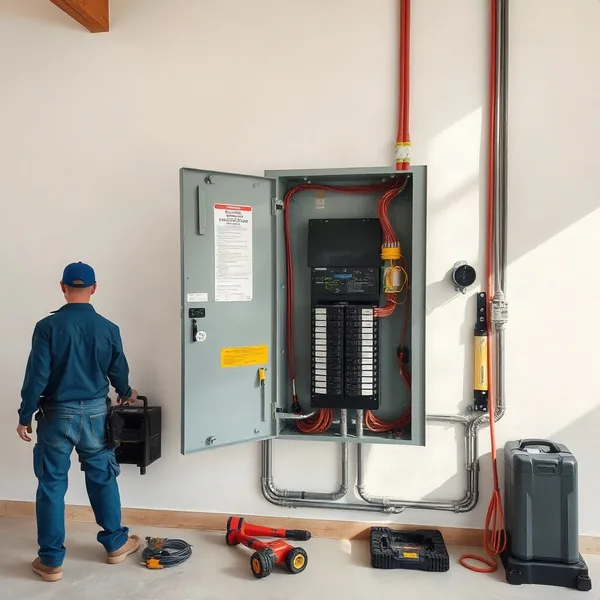
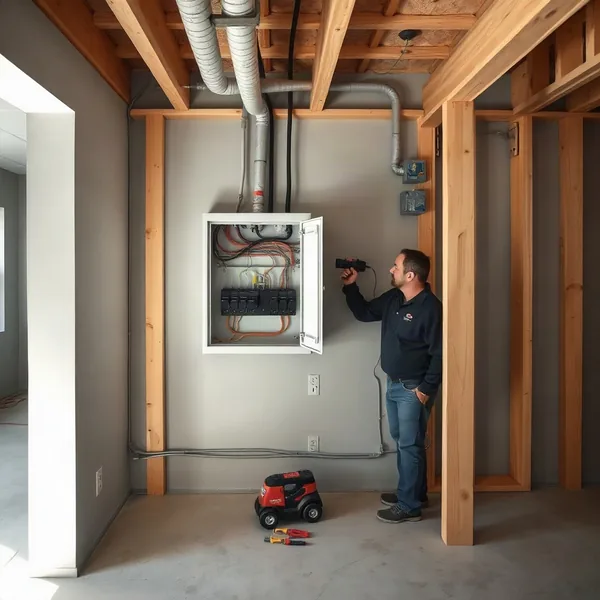
On installation day, the electrician shuts off power at the main breaker, removes the old panel, installs the new one, and transfers every circuit to its new breaker slot according to a documented panel schedule. Grounding and bonding are verified to current code before power is restored. If the project involves a larger service entrance, a new meter base goes in before Pacific Power reconnects. The whole sequence — from utility coordination to energizing the new panel — typically spans one to three days depending on how quickly Pacific Power can schedule the meter pull.
06
Permits and Inspection Through the City of Yakima
City of Yakima permit officefinal inspection
Every residential panel upgrade in Yakima requires a permit — no exceptions for licensed contractors operating legally.
Properties inside city limits pull that permit through the City of Yakima permit office, formally the City of Yakima Code Administration Division. Homes in unincorporated parts of Yakima County go through the Yakima County Building Department instead — the right jurisdiction depends on your specific address. After the electrical work is complete, a final inspection confirms the installation meets Washington State electrical code before the project closes out. Skipping this step creates problems at resale and can void homeowner's insurance coverage. A contractor who offers to skip the permit isn't doing you a favor — they're transferring risk onto you.