01
What Does Smoke Detector Installation Include?
hardwired alarminterconnected systembattery backup
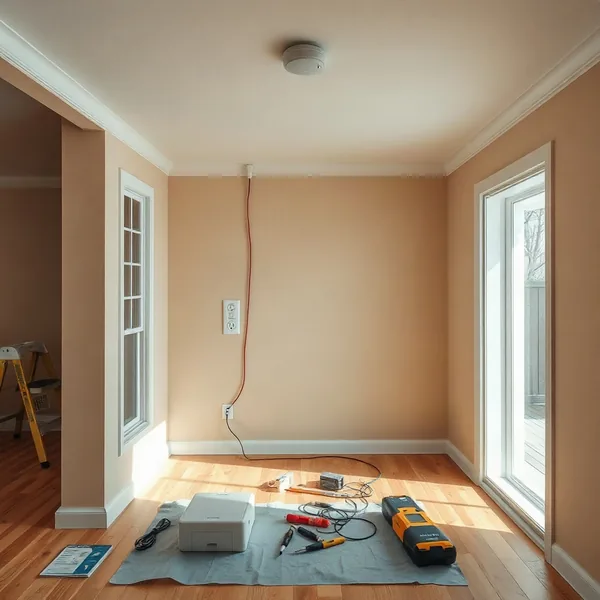
A complete fire detector installation covers more than swapping a unit on the ceiling — it means placing the right alarm type in every required location and wiring them so they communicate.
Contractors in our Yakima network install each hardwired alarm with a battery backup so the system keeps running during a power outage. They also wire every unit into an interconnected system, meaning if one alarm triggers at 2 a.m. in the basement, every alarm in the house sounds within seconds. For Yakima's older homes — many built before 1980 without any interconnect wiring — that often means running a new circuit, not just swapping a device.
02
How Much Does Smoke Alarm Installation Cost?
per-unit costwiring laborcode compliance
Smoke alarm installation cost depends on three things: the number of units, the type of alarm, and how much new wiring the job requires.
Fire alarm installation cost rises meaningfully in pre-1980 Yakima homes where no interconnect circuit exists, because the electrician has to rough in new wiring rather than tap an existing run. Code compliance, including the permit itself, is part of every hardwired job in this market.
03
Is a Smoke Detector Required in My Yakima Home?
Washington state fire codeIRC R314occupancy permit
Washington state fire code mandates smoke alarm installation in every home sold, rented, or significantly renovated in the state — and the requirements go beyond a single detector.
IRC R314 specifies that alarms be hardwired with battery backup and interconnected in all new construction and major remodels. In Yakima, an occupancy permit for new construction or a renovation permit triggering this requirement is issued either through the City of Yakima Code Administration Division for city-limit properties or through the Yakima County Building Department for unincorporated areas. Landlords renting to Yakima Valley's seasonal agricultural workforce face additional scrutiny during inspections, and Washington's landlord-tenant law independently requires working alarms in every unit.
04
When Should Old Smoke Detectors Be Replaced?
10-year lifespanhardwired replacementbattery models
Replacing smoke detectors is necessary every 10 years from the manufacture date stamped on the unit — the sensor chamber degrades even when the alarm appears to function normally.
In Yakima, where a large share of the housing stock predates 1980, it's common to find alarms that haven't been touched since installation. Replacing hardwired smoke detectors requires matching the correct voltage and connector type; swapping a modern unit onto aging wiring without verification can void listings compliance. Battery models are simpler to swap but still subject to the same 10-year lifespan rule — changing the battery every 6–12 months extends operational reliability within that window but does not reset the clock on the alarm itself.
05
Why Do I Need a Smoke Detector in Every Bedroom?
NFPA 72sleeping area coverageinterconnected alarms
NFPA 72 requires alarms inside every sleeping room, outside each separate sleeping area, and on every level of the home — because a fire can start anywhere while occupants are asleep with their doors closed.
Sleeping area coverage matters because a closed door can delay smoke from reaching a hallway alarm by several critical minutes. When interconnected alarms are installed, a trigger in the basement activates every unit simultaneously, giving every sleeping occupant the maximum evacuation window. Yakima's multi-story pre-1980 homes often have no interconnect circuit between floors, making an electrician-run upgrade especially valuable rather than simply adding standalone battery models.
06
Fire Alarm vs Smoke Detector Installation
fire alarm panelsmoke alarmmonitored system
Fire alarm installation and smoke detector installation are related but not identical scopes of work.
A residential smoke alarm detects combustion products and sounds locally; a fire alarm system installation adds a fire alarm panel that can communicate with a central monitoring station and dispatch emergency services automatically. Most single-family Yakima homes need a properly interconnected smoke alarm network — not a full monitored system — but rental properties with multiple units or detached ADUs may benefit from a monitored system. When you search for fire alarm installation near me, clarify whether you need a monitored panel or residential-grade interconnected smoke alarms, since licensing, permitting, and equipment costs differ significantly between the two.
07
Finding Smoke Detector Installation Near You
Yakima service arealocal electriciansame visit
When you search for smoke detector installation near me, you want a contractor who knows local permit requirements — not a general handyman.
Our Yakima service area covers properties throughout city limits as well as unincorporated Yakima County communities, and the local electricians in our network handle both jurisdictions. Because smoke detector installation is often requested alongside panel inspections or outlet work, many contractors can add alarm installation to the same visit, saving you a second service call. Searching smoke detector near me and selecting a licensed local electrician through our referral service means the work is done by someone familiar with Yakima's older housing stock and the correct permit channel for your address.
08
Affordable and Free Smoke Detector Programs
fire department programslow-cost unitsplacement guidance
Free smoke detectors are available to many Yakima-area households through local fire department programs — the Yakima Fire Department and some Yakima County fire districts periodically distribute no-cost units and provide best smoke detector placement guidance during home visits. Fire alarms free through community programs are typically single-station battery units, not hardwired — so they satisfy short-term safety needs but not the hardwired interconnect requirement for permitted renovation or occupancy work. When a contractor installs units, they confirm best smoke detector locations per NFPA 72: ceiling-mounted, at least 10 feet from cooking appliances, and away from HVAC supply vents.